


How to Store Jumpers in Wardrobe Without Damage

Let’s be honest—there’s nothing more frustrating than pulling out your favorite jumper and finding it stretched, faded, or full of lint. You bought it to stay cozy, not to look tired after a few months. If you’ve ever wondered how to store jumpers in wardrobe without ruining their shape, softness, or style, you’re in exactly the right place.
Think of your home like a wardrobe for clothes. If the home is messy, cramped, or careless, your jumpers will suffer. However, with a few smart habits, you can ensure that every knit stays fresh, fluffy, and fabulous for years. Let’s break it all down in a simple, practical way.
Why Proper Jumper Storage Matters
Jumpers are not like jeans or t-shirts. They’re soft, flexible, and often made from delicate fibers. That means they need special attention.
Bad storage can lead to:
- Stretching at the shoulders
- Lint buildup
- Color fading
- Weird fold lines
- Moth damage
Once a jumper loses its shape or texture, it rarely comes back. Prevention is always easier than repair. Not all jumpers are created equal. Wool, cotton, acrylic, and cashmere all behave differently. Knowing the fabric helps you choose the safest storage method.
Understanding Different Jumper Fabrics
Let’s quickly go over the most common jumper fabrics and what they need.
1. Wool Jumpers
Wool is warm, breathable, and delicate. It hates:
- Moisture
- Heavy pressure
- Hanging for long periods
Always store wool folded and well-ventilated.
2. Cotton Jumpers
Cotton is more durable and forgiving. It can handle light stacking but still benefits from neat folding.
3. Cashmere and Delicate Knits
These are luxury fabrics—and they need luxury care. Cashmere fibers are fine and soft. If crushed or stretched, they lose that premium feel fast. Always store them:
- Folded
- Inside breathable cotton bags
- Away from direct light
How to Store Jumpers in Wardrobe for Small Spaces
Getting the basics right makes everything else easier. Before you move on to advanced storage tricks, these simple methods will instantly upgrade how to store jumpers in wardrobe.
1. Sort by Color and Pattern
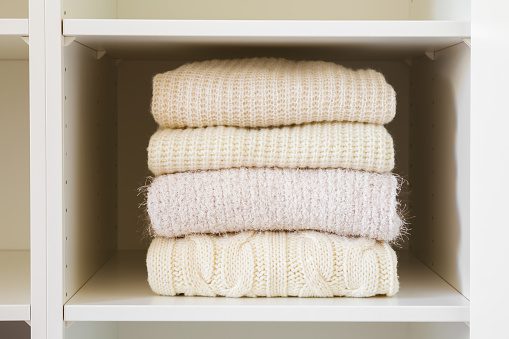
Start by arranging your jumpers by color and pattern. Light shades together, dark tones together, and patterned sweaters in one group. This not only looks visually pleasing but also saves time when picking outfits. Plus, it prevents color transfer when jumpers rub against each other in packed wardrobes.
2. Use All the Flat Space You Have
Flat space is gold when it comes to jumper storage. Make full use of shelves, the top of drawers, and unused wardrobe sections. Folding jumpers flat helps prevent stretch marks and keeps their shape intact, especially for wool and cashmere fabrics.
3. Go Under the Bed
If wardrobe space is tight, the area under your bed can be a hidden storage treasure. Use breathable storage boxes or fabric containers to store off-season jumpers. This keeps them safe from dust while freeing up valuable wardrobe space.
4. Place Sweaters in Baskets
Baskets are a stylish and practical way to store jumpers. They keep stacks neat and organized while allowing airflow. Woven or fabric baskets work best for daily-use sweaters and kids’ jumpers that need quick access.
5. Hang Your Sweaters
Hanging should be done carefully and only for sturdy knitwear. If you must hang a jumper, use the folding-over-the-hanger method to prevent shoulder stretching. Delicate knits should never be hung for long periods.
6. Try a Vertical Fold
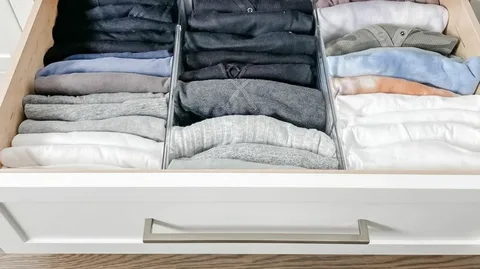
Vertical folding is a game-changer for small wardrobes. Instead of stacking, store jumpers upright like files. This method saves space, prevents crushing, and lets you see every jumper at a glance—no more messy piles.
Seasonal Storage Tips for How to Store Jumpers in Wardrobe
Your winter jumpers don’t need to hog space in summer, right?
How to Store Jumpers in Summer
- Wash before storing
- Fold neatly
- Store in breathable fabric boxes
- Add natural moth repellents
How to Store Jumpers in Winter
Winter jumpers should stay:
- Easy to access
- Loosely stacked
- Away from damp walls
How to Protect Jumpers from Moths and Insects
Moths love natural fibers like wool and cashmere, and preventing moth damage in clothes.
Natural Moth Repellents
Use:
- Cedar blocks
- Lavender sachets
- Bay leaves
They keep insects away without harsh chemicals.
What to Avoid Using
Avoid mothballs—they smell awful and leave chemical residue on clothes.
How to Store Jumpers in Wardrobe to Keep Freshness
A fresh wardrobe = fresh jumpers.
Preventing Odors
- Never store slightly damp jumpers
- Don’t trap sweaty clothes in tight drawers
- Air out the wardrobe once a week
Maintaining Airflow
Leave a little space between stacks. Clothes need to breathe—just like you do.
How to Store Expensive Jumpers Without Damage
Luxury fabrics demand extra love.
Storage Boxes vs Wardrobe Shelves
- Boxes protect from dust and light
- Open shelves allow airflow
For expensive pieces, use a combination of both.
Using Cotton Storage Bags
Cotton bags protect without trapping moisture—perfect for long-term storage.
Common Mistakes People Make When Storing Jumpers
Let’s save you from heartbreak.
- Overstacking – Too much pressure flattens fibers and creates ugly fold lines.
- Storing Dirty Jumpers – Food stains, sweat, and body oils attract insects and cause yellowing.
- Ignoring Moisture – Humidity = mold + bad smells + fabric damage.
FAQs
1. How to store jumpers in wardrobe without using hangers?
Always fold them neatly and place them on shelves or inside fabric storage boxes.
2. Can I stack heavy jumpers on light ones?
No, heavy jumpers should always be at the bottom to prevent crushing.
3. How long can jumpers stay in storage without damage?
If clean, dry, and properly ventilated, they can stay safe for 6–12 months.
4. What’s the best way to prevent moths naturally?
Use cedar blocks, lavender, or bay leaves instead of chemical mothballs.
5. Should I wash jumpers before long-term wardrobe storage?
Yes, always. Even invisible dirt can attract insects and cause discoloration.
Conclusion
Knowing how to store jumpers in wardrobe properly isn’t about being fancy—it’s about being smart. A well-stored jumper stays soft, keeps its shape, and looks new season after season. Whether your wardrobe is big or small, modern or simple, these storage habits will protect your clothes and save your money in the long run.
Treat your jumpers like good friends—give them space, comfort, and care—and they’ll stick around for years looking just as good as the day you bought them.